

The 2026 Honda CR-V e:FCEV is a fuel cell electric SUV that combines compressed hydrogen operation with plug-in electric driving capability. It uses a Proton Exchange Membrane Fuel Cell system, an AC synchronous permanent-magnet electric motor, and a lithium-ion battery to support zero-emission vehicle operation. The model pairs front-wheel drive with a fixed, single-speed, direct-drive transmission and includes multiple drive modes that adjust vehicle response for different driving conditions. Its technical package also includes a dedicated chassis configuration, electric power steering, an electro-servo brake system, and a comprehensive group of Honda Sensing® driver-assistive features. Inside, the 2026 Honda CR-V e:FCEV provides digital displays, wireless smartphone integration, navigation, premium audio, power-adjustable seating, and flexible cargo functionality.
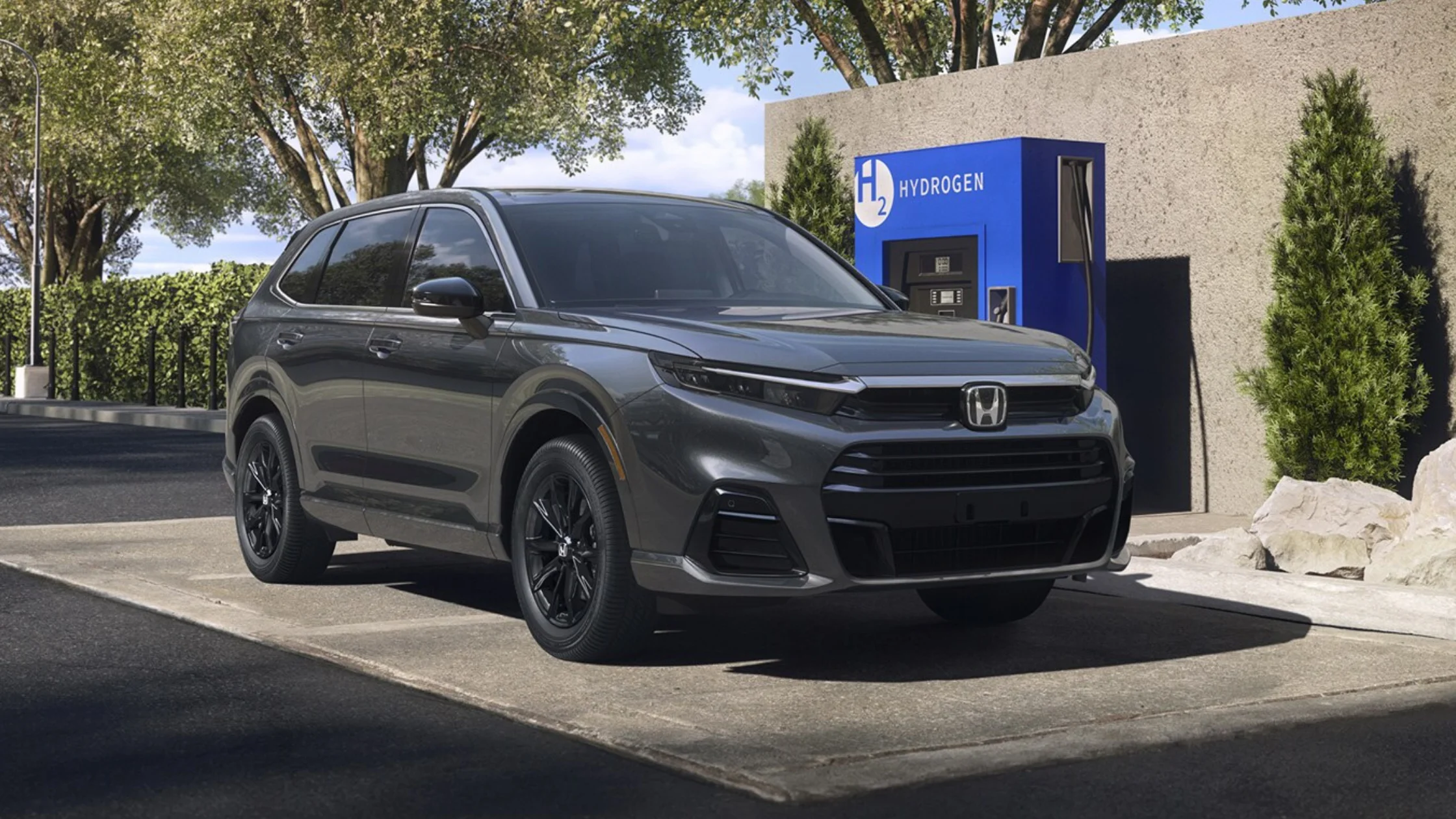
The 2026 Honda CR-V e:FCEV uses a dedicated electrified power unit built around a Proton Exchange Membrane Fuel Cell system. This fuel cell module operates across a temperature range from -22 degrees Fahrenheit to 212 degrees Fahrenheit, giving the system a defined operating window for varied climate conditions. The module produces 92.2 kW of power and measures 33.8 liters in size. The fuel cell module weighs 166.7 pounds, which identifies it as a major component within the vehicle's electrified architecture. The system supports a ZEV emissions rating, which aligns the vehicle's operation with zero-emission vehicle classification.
Electric Motor Output and Battery Capacity
The 2026 Honda CR-V e:FCEV uses an AC synchronous permanent-magnet electric motor rated at 174 horsepower. The motor produces 229 lb-ft of torque and sends power through the front-wheel-drive system. Honda pairs the motor with a lithium-ion battery that operates at 347.5 volts. The battery has a capacity of 17.7 kWh, which supports the vehicle's EV driving function. The model also carries a tune-up interval at 100,000 miles plus or minus, with no scheduled tune-ups specified.
Drivetrain Layout and Drive Modes
The 2026 Honda CR-V e:FCEV uses front-wheel drive and a fixed, single-speed, direct-drive transmission. The transmission includes Sport Mode and shift-by-wire operation, giving the vehicle an electronically managed gear-selection interface. The overall ratio and reverse ratio are both at 10.255, while the primary gear ratio is 2.95. The final drive ratio is 3.476, which completes the drivetrain specification for the model. Honda also equips the SUV with 4-mode Dynamic Drive Modes, including Snow, Econ, Normal, and Sport, along with an EV Mode for battery-supported electric operation.
Hydrogen Fuel System, Efficiency, and Driving Range
The 2026 Honda CR-V e:FCEV uses compressed hydrogen gas as its required fuel. Its fuel tank operates at 10,000 psi and has a capacity of 4.3 kg. The vehicle's MPGe ratings are 61 city, 52 highway, and 57 combined. The SUV also provides an EV range of 29 miles through its battery-supported electric operation. Its total driving range is 270 miles, giving the model both hydrogen fuel cell capability and plug-in electric usability within one technical package.
Disclaimer: *270 mile EPA Range Rating for CR-V e:FCEV. Use for comparison purposes only. Actual range will vary based on several factors, including temperature, terrain, battery age & condition, loading, use and maintenance.
EV Function and Energy Use
EV Mode gives the 2026 Honda CR-V e:FCEV a defined electric-driving function within its broader fuel cell electric layout. The 17.7-kWh lithium-ion battery supports this mode and works with the 347.5-volt electrical system. The vehicle's 29-mile EV range allows short-distance electric operation before the fuel cell system becomes the primary energy source. The fuel cell module then generates electricity from compressed hydrogen to support continued driving. This arrangement gives the 2026 Honda CR-V e:FCEV a distinctive technical identity because it combines fuel cell output, battery capacity, and direct electric motor drive.
Chassis, Steering, Suspension, and Braking
The 2026 Honda CR-V e:FCEV uses an Advanced Compatibility Engineering™ body structure and aluminum sub-frames at the front and rear. Honda equips the SUV with a MacPherson® strut front suspension and a multi-link rear suspension. Amplitude Reactive Dampers support the suspension system, while Agile Handling Assist contributes to vehicle control. The front stabilizer bar measures 26.0 mm, and the rear stabilizer bar measures 17.7 mm.
Steering and Maneuverability
The 2026 Honda CR-V e:FCEV includes Electric Power Steering for assisted steering response. The steering system has 2.4 turns lock-to-lock, which identifies how many steering wheel rotations the system requires from full left to full right. The steering ratio is 12.3. The turning diameter measures 37.1 feet from curb to curb, which helps define the SUV's maneuvering footprint.
Brake System and Wheel Equipment
Honda equips the 2026 Honda CR-V e:FCEV with an Electronic Parking Brake that includes Automatic Brake Hold. The model also uses an Electro-Servo Brake system, which supports braking control within the electrified vehicle platform. Its braking hardware consists of 13-inch ventilated front discs and 13-inch solid rear discs. The SUV rides on 18-inch by 7.5-inch Berlina Black wheels. Its tires are sized 235/60R18 103H and carry a Mud+Snow designation, and the vehicle includes a tire repair kit.
Dimensions, Weight, Passenger Space, and Cargo Utility
The 2026 Honda CR-V e:FCEV has exterior dimensions that support two-row SUV utility while maintaining defined maneuverability measurements. It measures 187.6 inches long, 73.5 inches wide, and 66.6 inches high. The wheelbase measures 106.3 inches, while the front and rear tracks measure 63.4 inches and 64 inches. Ground clearance is 6.7 inches when unladen. Honda also lists approach and departure angles of 15.5 degrees and 20.3 degrees, which add further context for the vehicle's body geometry.
Interior Measurements and Cargo Capacity
The cabin of the 2026 Honda CR-V e:FCEV provides two rows of passenger accommodations with detailed interior measurements. Headroom measures 40.0 inches in the first row and 38.2 inches in the second row. Legroom measures 41.4 inches in the first row and 41.1 inches in the second row, giving both seating rows similar leg space. Shoulder room measures 57.9 inches in the first row and 56 inches in the second row, while hip room measures 55.6 inches in the first row and 52.6 inches in the second row. EPA passenger volume is 106.4 cubic feet, and cargo volume measures 25.2 cubic feet behind the second row, 29.7 cubic feet behind the first row in standard configuration, and up to 61 cubic feet behind the first row at maximum capacity.
Vehicle Weight and Balance
The 2026 Honda CR-V e:FCEV has a curb weight of 4,460 pounds. The vehicle's weight distribution is 58 percent front and 42 percent rear. This specification reflects the mass placement of the fuel cell electric system, battery components, body structure, and chassis hardware. Weight distribution plays a functional role in how a vehicle responds during acceleration, braking, steering, and cornering.
Honda Sensing® and Driver-Assistive Technology
The 2026 Honda CR-V e:FCEV includes Honda Sensing® as a major part of its safety and driver-assistive technology package. This group of systems supports driver awareness, braking assistance, lane support, speed assistance, and low-speed control functions. Collision Mitigation Braking System™, Road Departure Mitigation System, Lane Departure Warning, and Forward Collision Warning are included. Adaptive Cruise Control with Low-Speed Follow and Lane Keeping Assist System are also part of the package. The vehicle also includes Traffic Sign Recognition, Blind Spot Information System, Cross Traffic Monitor, Traffic Jam Assist, Low Speed Braking Control, Auto High Beam Headlights, and parking sensors with four front and four rear sensors.
Safety Structure and Occupant Protection
The 2026 Honda CR-V e:FCEV includes a wide range of safety and occupant protection features beyond its driver-assistive systems. It comes with driver and passenger i-SRS airbags, driver and passenger knee airbags, front i-side airbags, rear i-side airbags, and side curtain airbags. The vehicle also includes Vehicle Stability Assist™ with traction control, Anti-Lock Braking System, Electronic Brake Distribution, and a Tire Pressure Monitoring System. Additional safety-related equipment includes a Driver Attention Monitor and a rearview camera with dynamic guidelines. Rear Seat Reminder also appears in the safety and convenience equipment, supporting occupant awareness when leaving the vehicle.
Driver Convenience and Control Features
Honda equips the 2026 Honda CR-V e:FCEV with driver convenience features that support easier operation in varied driving conditions. Deceleration selectors give the driver a way to adjust deceleration behavior through the vehicle's controls. Hill Start Assist supports controlled starts on inclines, while Hill Descent Control supports controlled movement on downhill grades. Brake Hold helps maintain brake pressure when stopped, and one-touch turn indicators support lane-change signaling. The SUV also includes sliding sunvisors, seat belt reminders for all seating positions, and LATCH lower anchors in the second-row outboard seats with tether anchors for all second-row positions.
Cabin Technology, Audio, and Connectivity
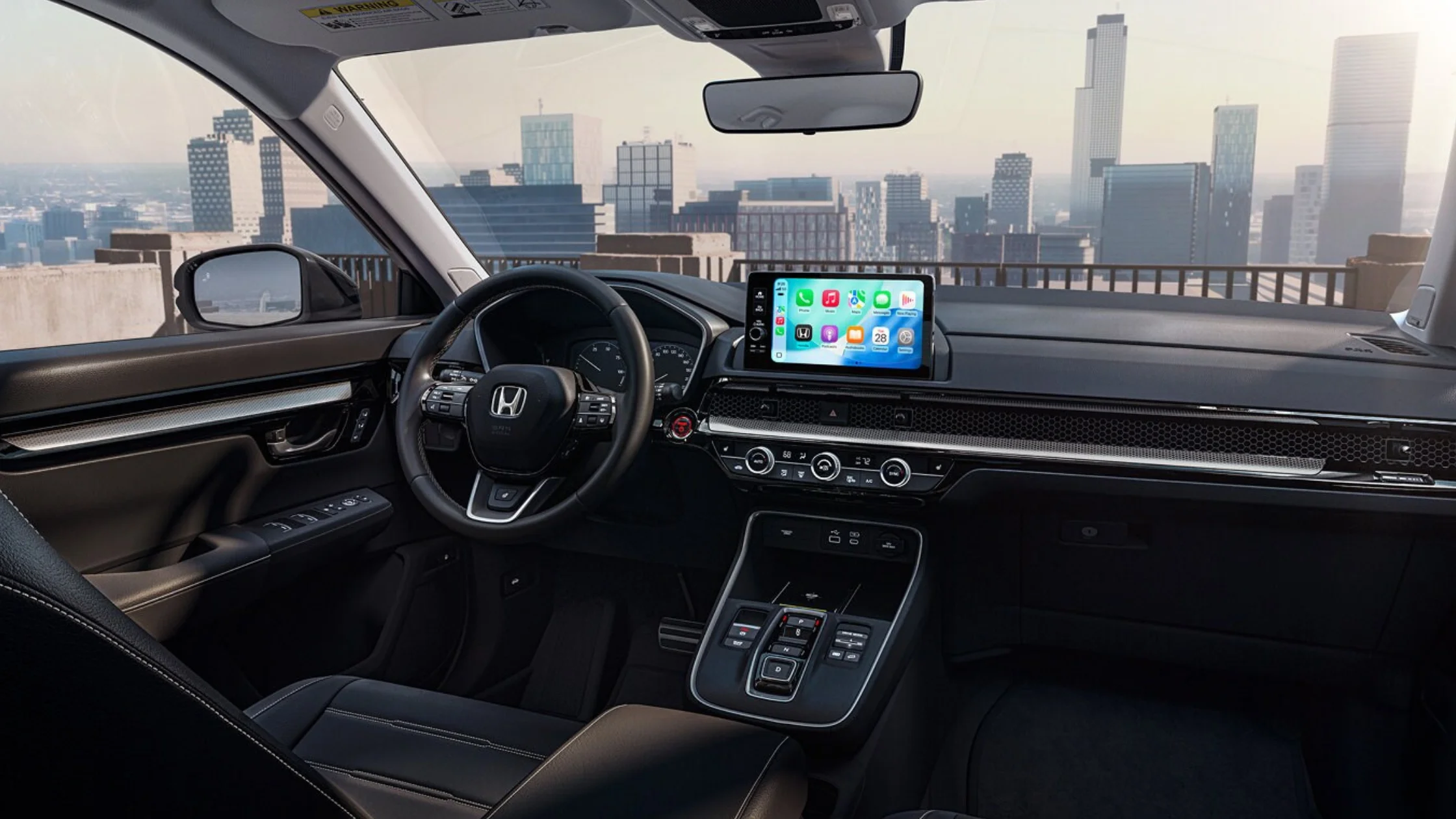
The 2026 Honda CR-V e:FCEV includes a digital cabin interface with a 10.2-inch digital instrument cluster and a 9-inch color touchscreen display. The vehicle comes with a Honda Satellite-Linked Navigation System™ with voice recognition and Honda HD Digital Traffic. Audio equipment includes a Bose® Premium Sound System with 12 speakers. Smartphone integration includes wireless Apple CarPlay® compatibility and wireless Android Auto™ compatibility. The model also includes Bluetooth® Streaming Audio, SiriusXM®, HD Radio™, Active Noise Cancellation™, Wi-Fi hotspot capability, HondaLink®, and HondaLink® Subscription Services.
Charging, Ports, and External Power
The 2026 Honda CR-V e:FCEV includes several electrical convenience features for device charging and external power use. It provides a 120V/1,500-watt AC external power supply, which adds functional utility to the vehicle's electrified platform. The front row includes one USB-A 2.5A smartphone and audio interface. The vehicle also includes one front USB-C 3.0A charging port and two rear USB-C 3.0A charging ports. A wireless charging pad with Qi compatibility further supports cable-free device charging inside the cabin.
Interior Comfort, Seating, and Practical Features
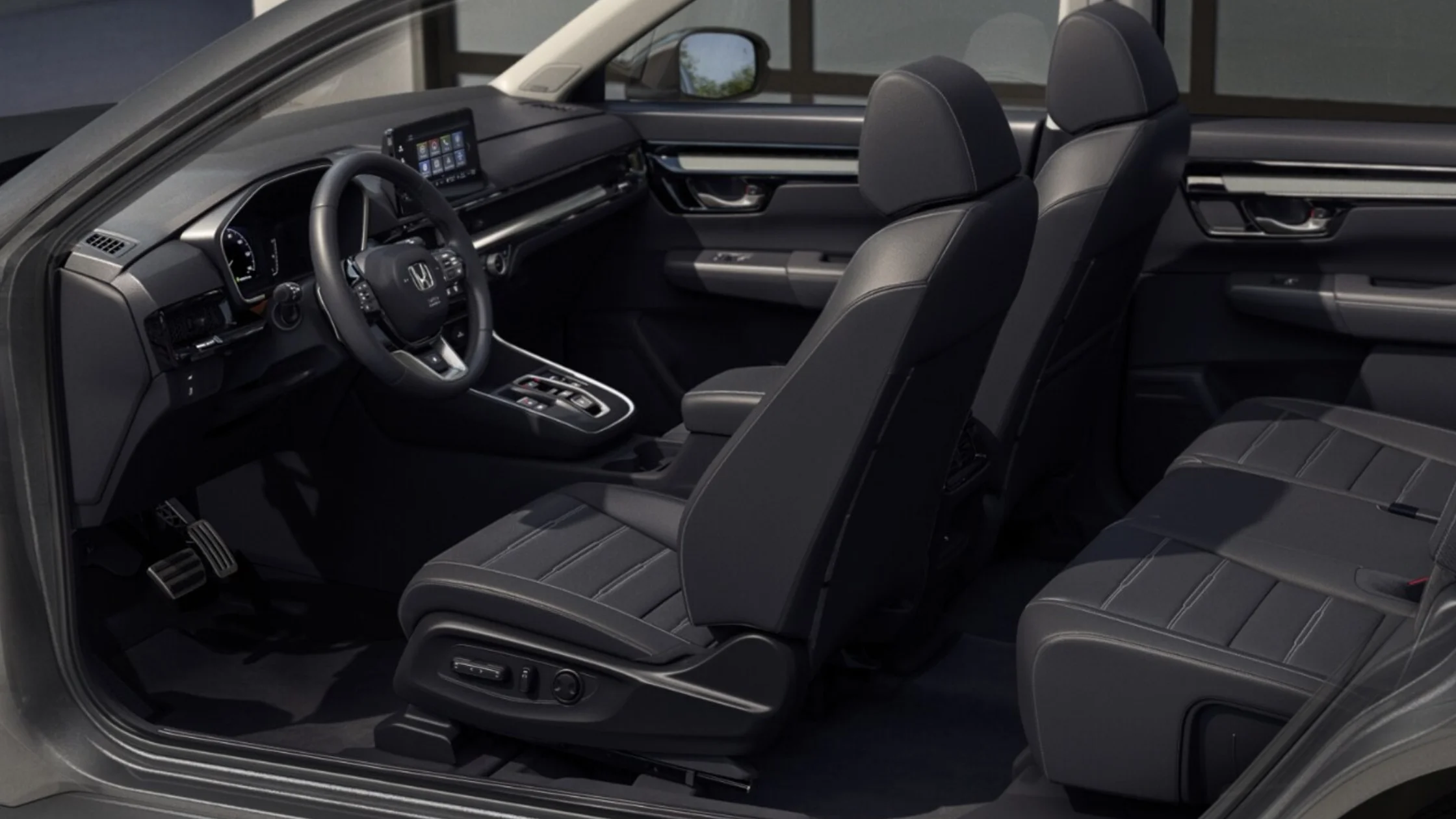
The 2026 Honda CR-V e:FCEV combines practical interior equipment with comfort-focused features across both seating rows. It includes power windows with auto up and down for all windows, illuminated sunvisor vanity mirrors for the driver and passenger, and push-button start. The front seats are heated, and the cabin uses bio-synthetic leather-trimmed seats. The driver's seat includes 10-way power adjustment with power lumbar support and two-position memory. The passenger seat includes 4-way power adjustment, giving the front cabin a clear focus on adjustability and daily usability.
Climate, Materials, and Cabin Details
The 2026 Honda CR-V e:FCEV includes air conditioning with an air-filtration system and dual-zone climate control with a humidity sensor. Remote climate pre-conditioning allows cabin temperature preparation before driving. The cabin also includes an automatic-dimming rearview mirror, LED front and rear map lights, a sunglass holder, and a 60/40 split fold-down rear seatback. Additional interior details include sport pedals, front foot and door handle ambient lighting, a synthetic leather-wrapped steering wheel, honeycomb interior trim, and a heated steering wheel. Smart Entry with Walk Away Auto Lock® adds another convenience feature for access and vehicle security.
Exterior Lighting, Glass, Access, and Colors
The exterior equipment on the 2026 Honda CR-V e:FCEV supports visibility, access, and everyday functionality. The SUV includes LED headlights and taillights, auto on and off headlights, LED front turn indicators, LED daytime running lights, and LED side mirror turn indicators. Halogen rear turn indicators are also part of the exterior lighting package. The heated, power gloss black side mirrors support visibility in colder conditions. A power tailgate with hands-free access adds functional convenience when loading cargo.
Glass, Wipers, and Exterior Finishes
The 2026 Honda CR-V e:FCEV includes an acoustic laminate windshield and front side glass. This glass specification supports the cabin environment by addressing sound transmission at the front of the vehicle. Rain-sensing wipers provide automatic wiper response when moisture reaches the windshield. Privacy glass is also included as part of the exterior equipment. Standard exterior color choices include Meteorite Gray Metallic with black trim and Platinum White Pearl with black trim.
Schedule a Test Ride Today
Experience the 2026 Honda CR-V e:FCEV with our team at Pompano Honda in Coral Springs, FL. We can help you review its fuel cell electric powertrain, EV Mode, drive modes, digital technology, cabin comfort, and Honda Sensing® safety features in person. Schedule a test drive or test ride to evaluate its acceleration response, steering feel, braking operation, seating comfort, and visibility from the driver's seat. Our team can also explain the vehicle's cargo flexibility, connectivity features, exterior equipment, and functional controls during your visit. This focused walkaround can help you understand how its performance, technology, comfort, handling, and safety systems work together in daily driving.
Make an Inquiry
* Indicates a required field
